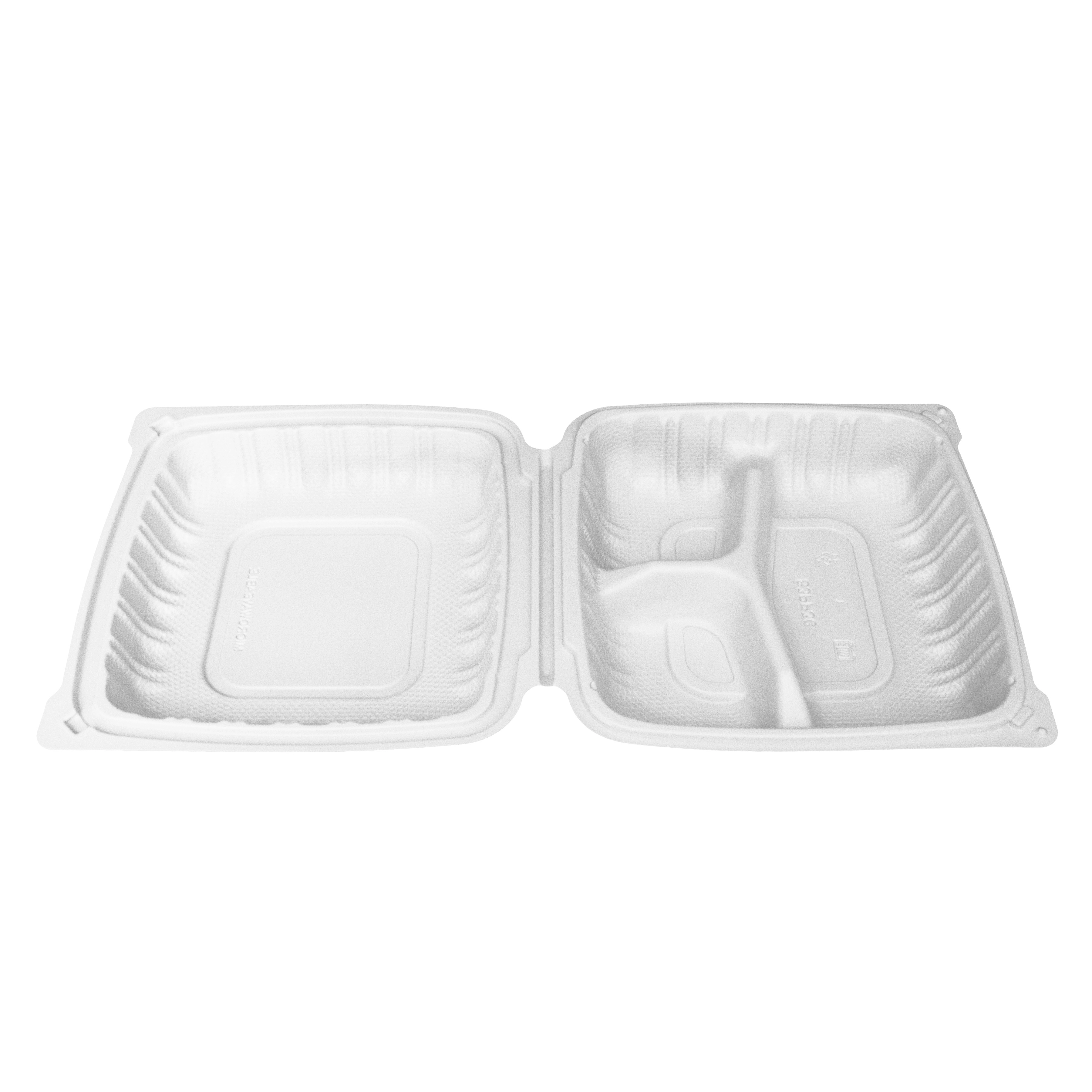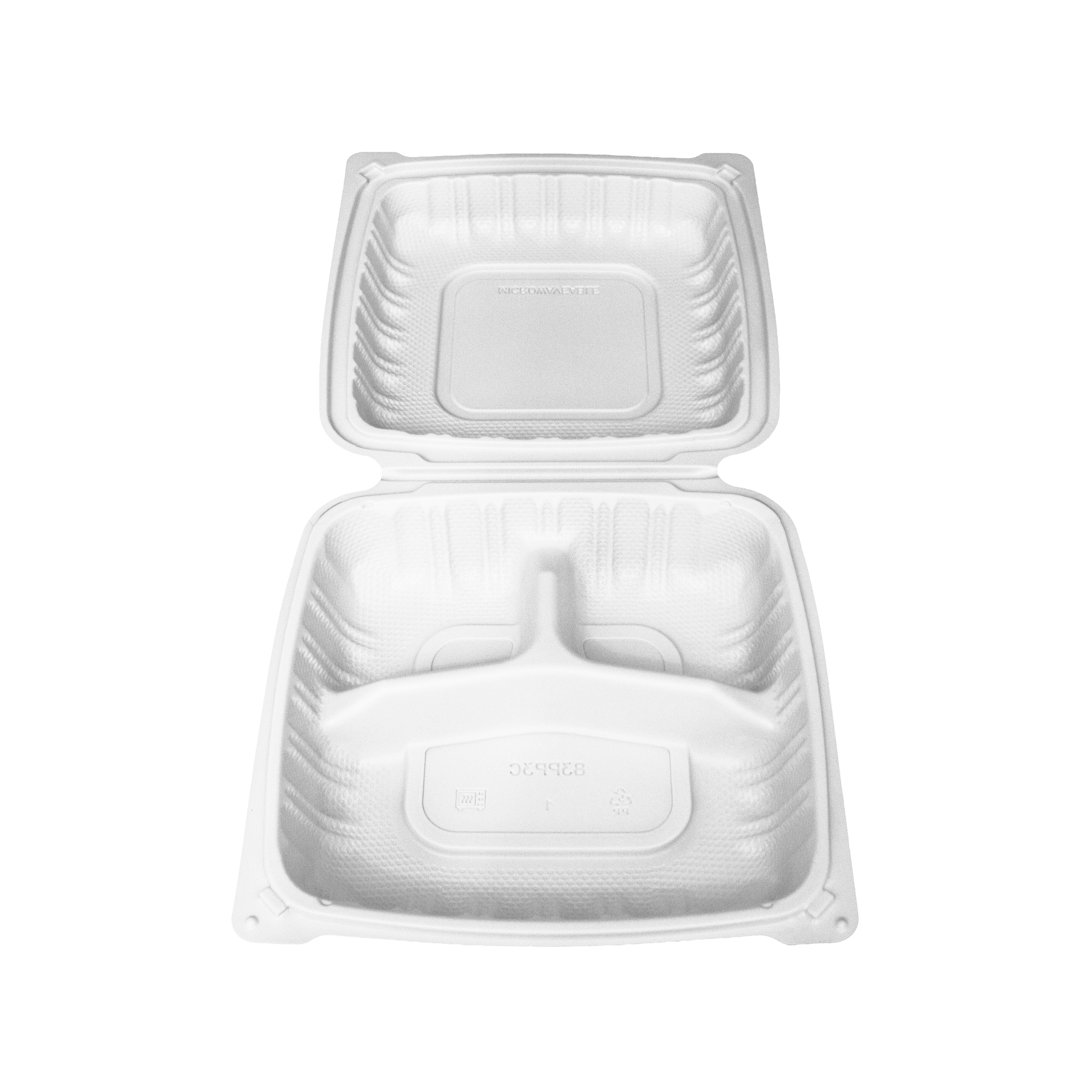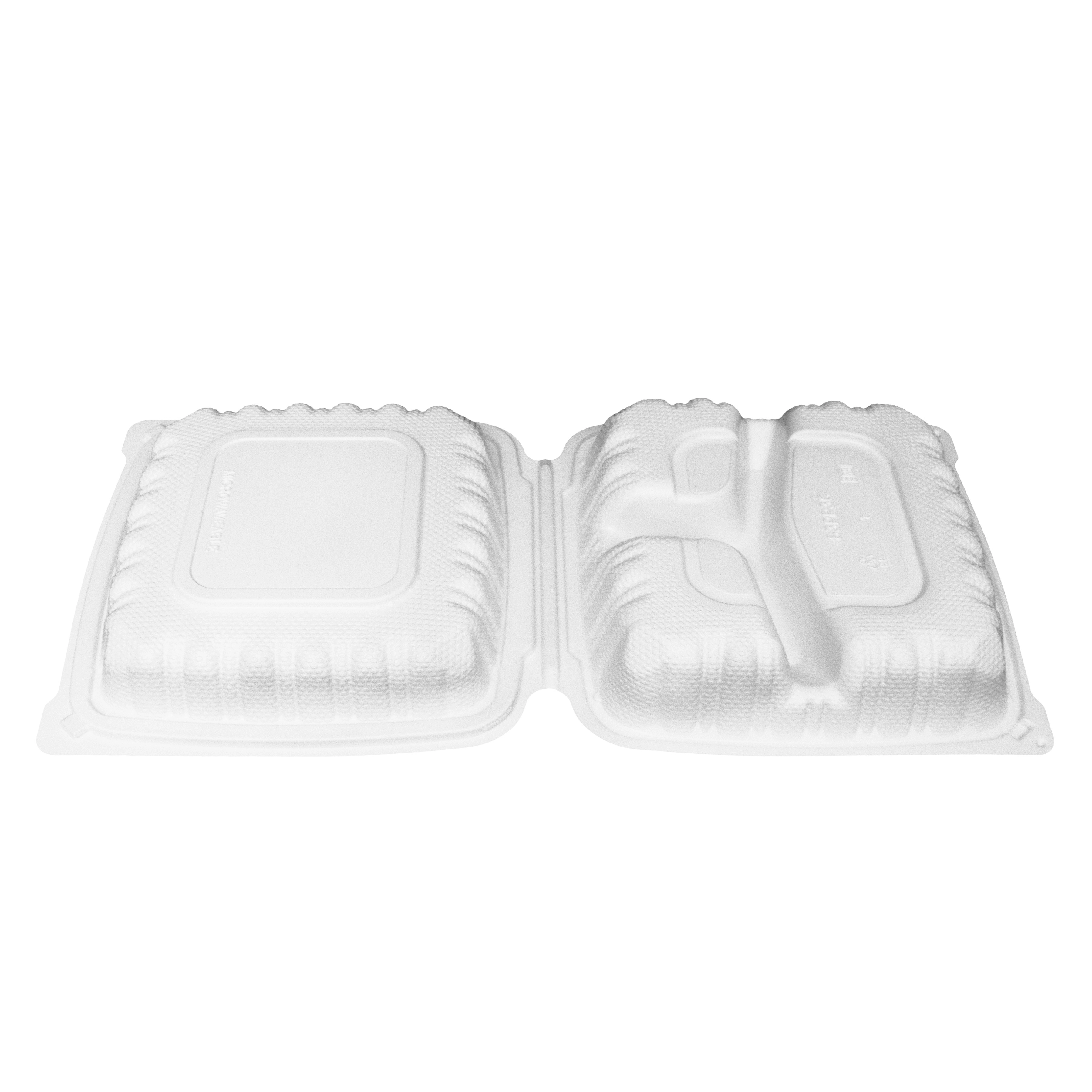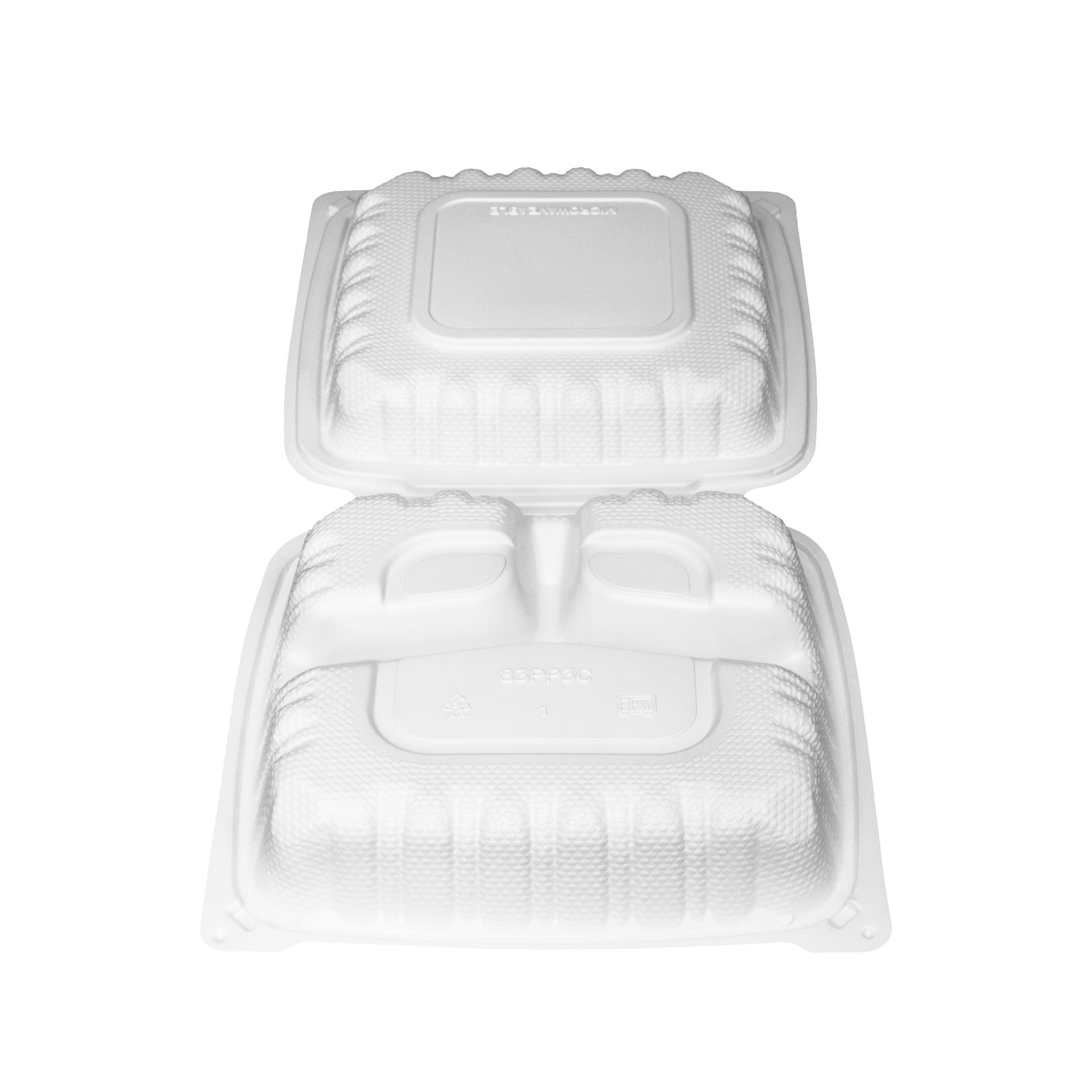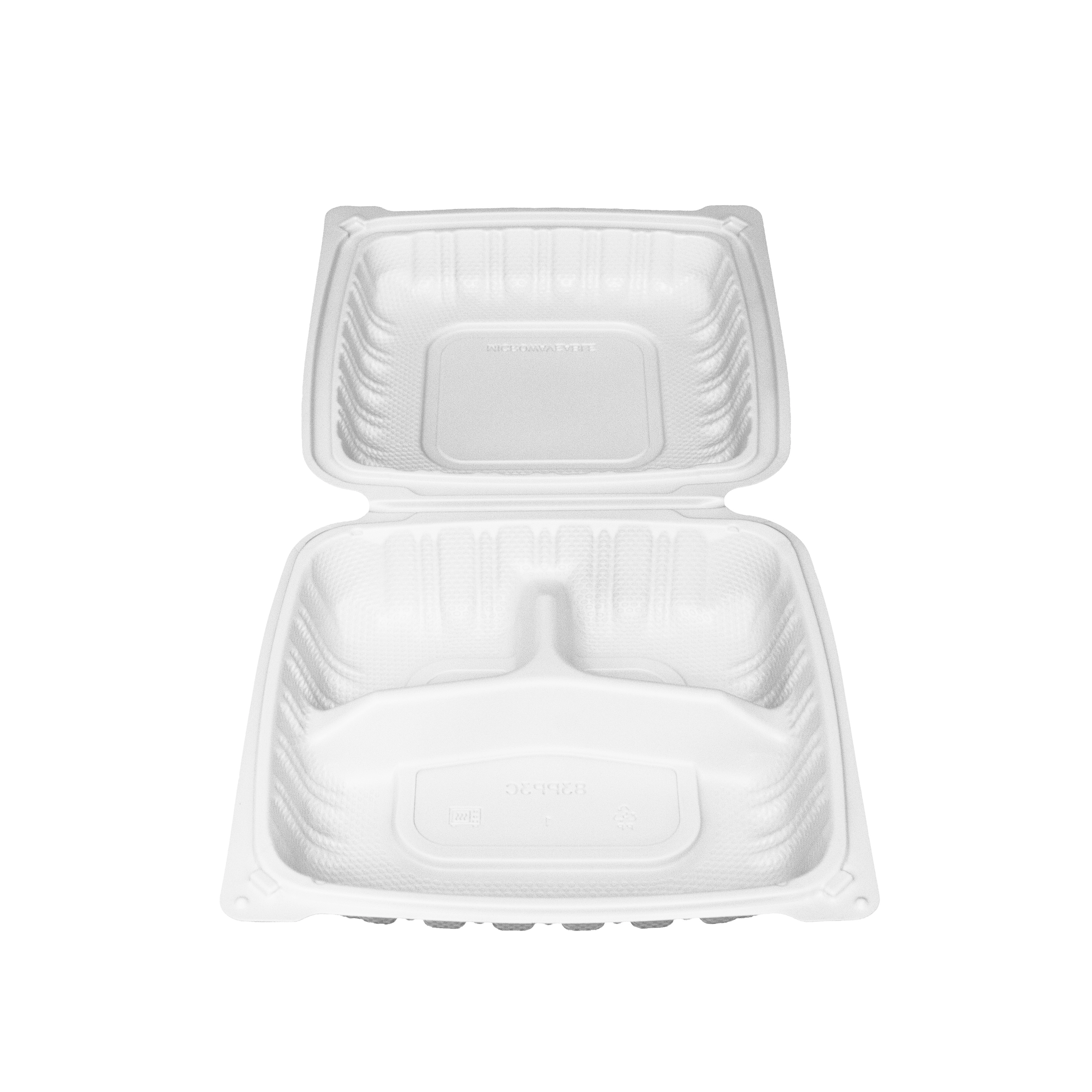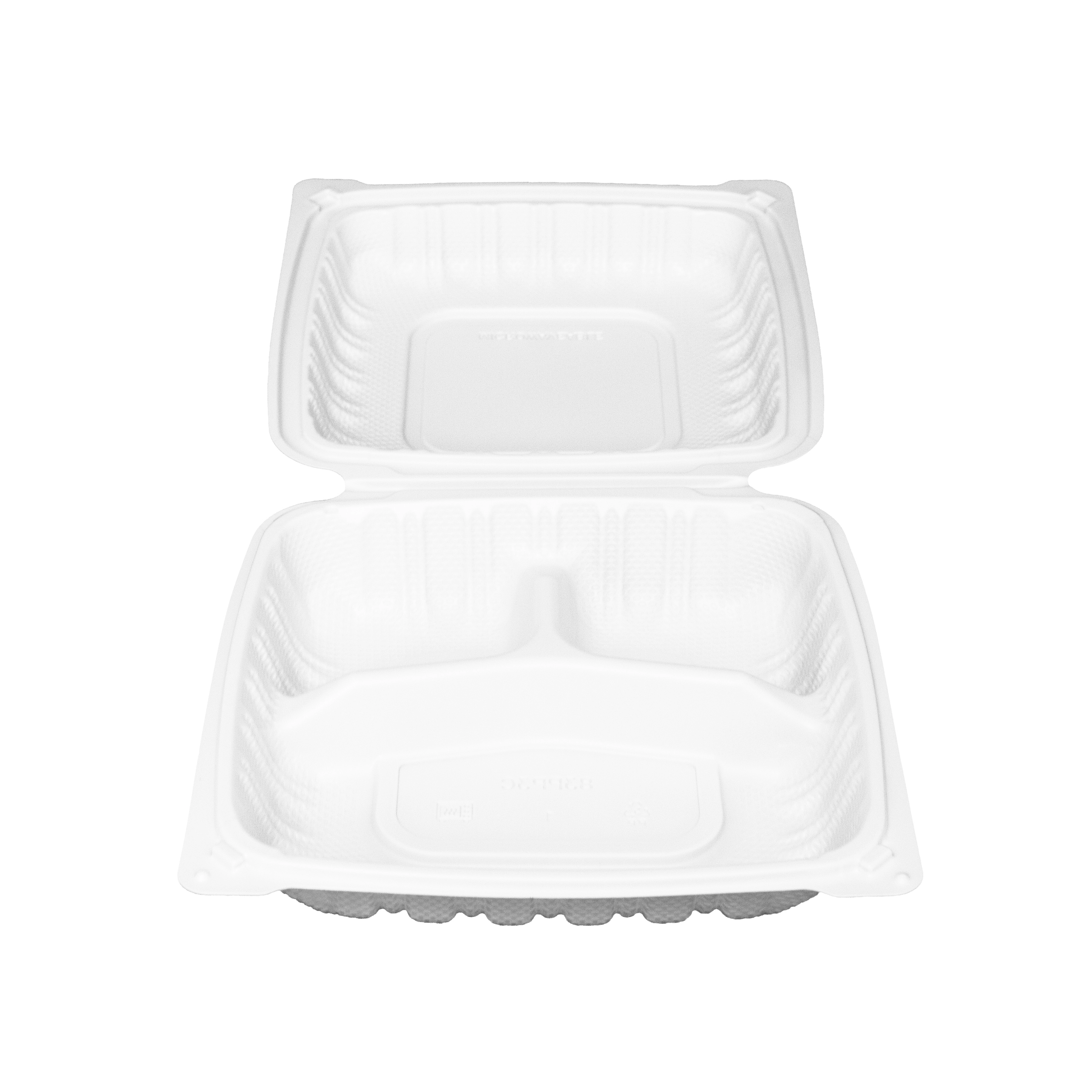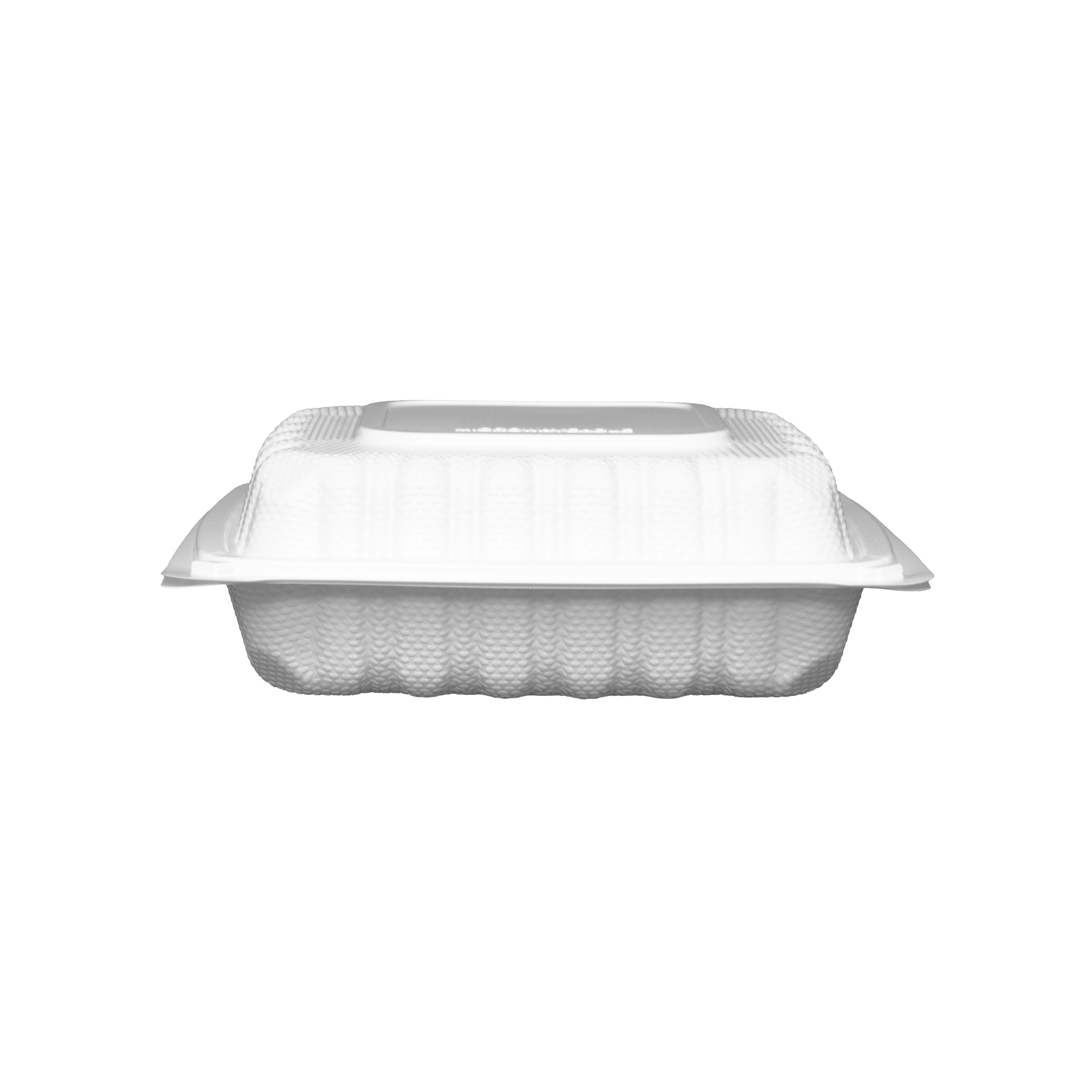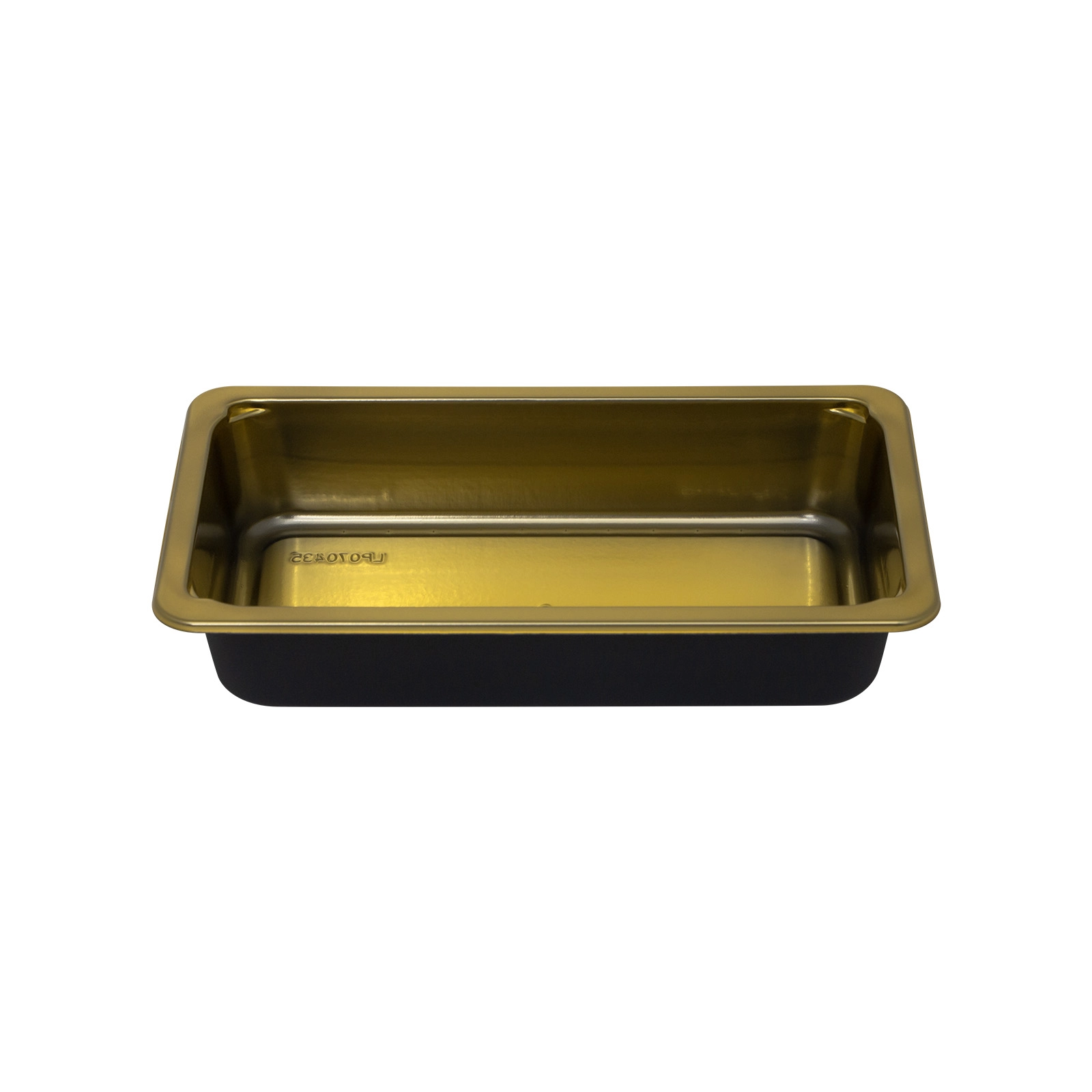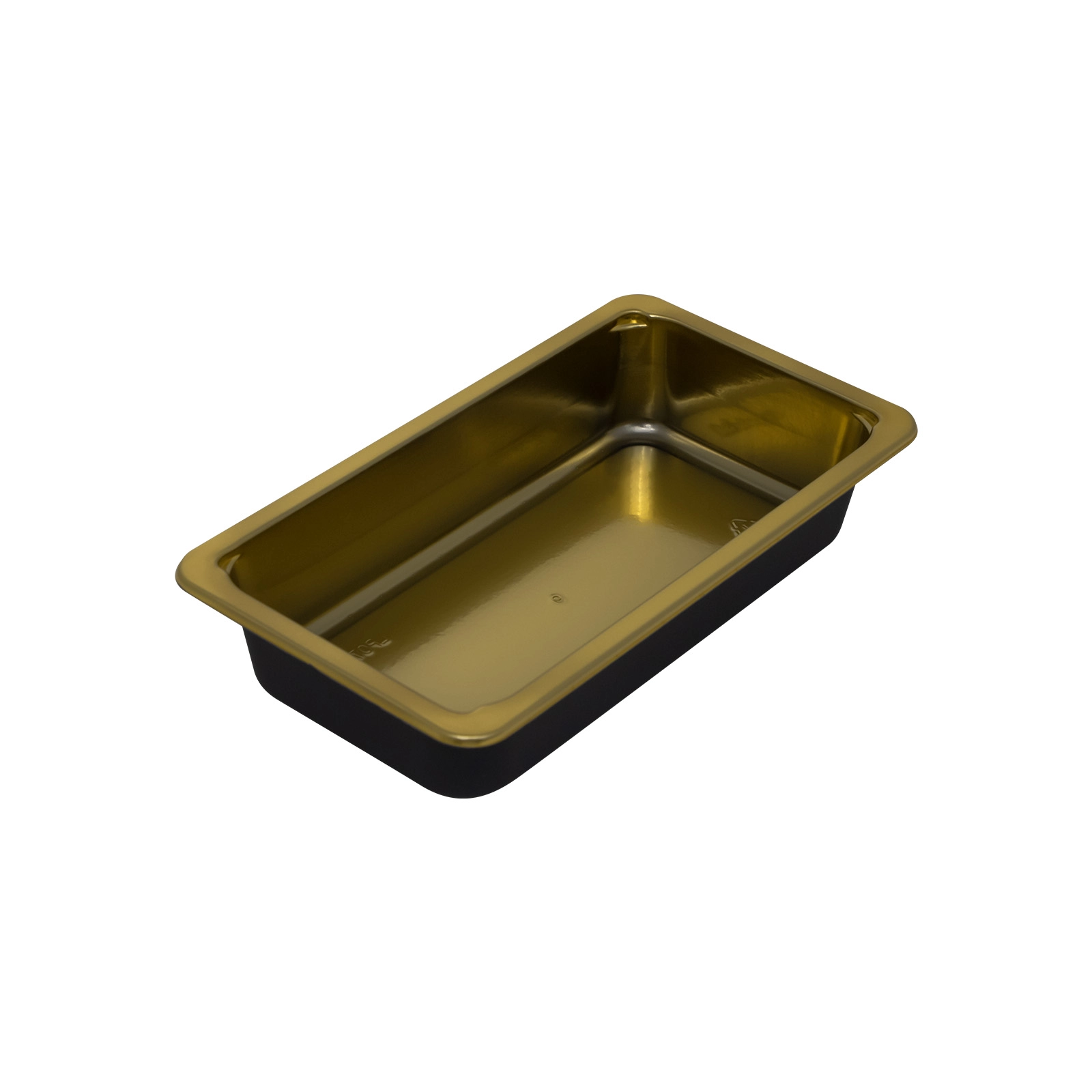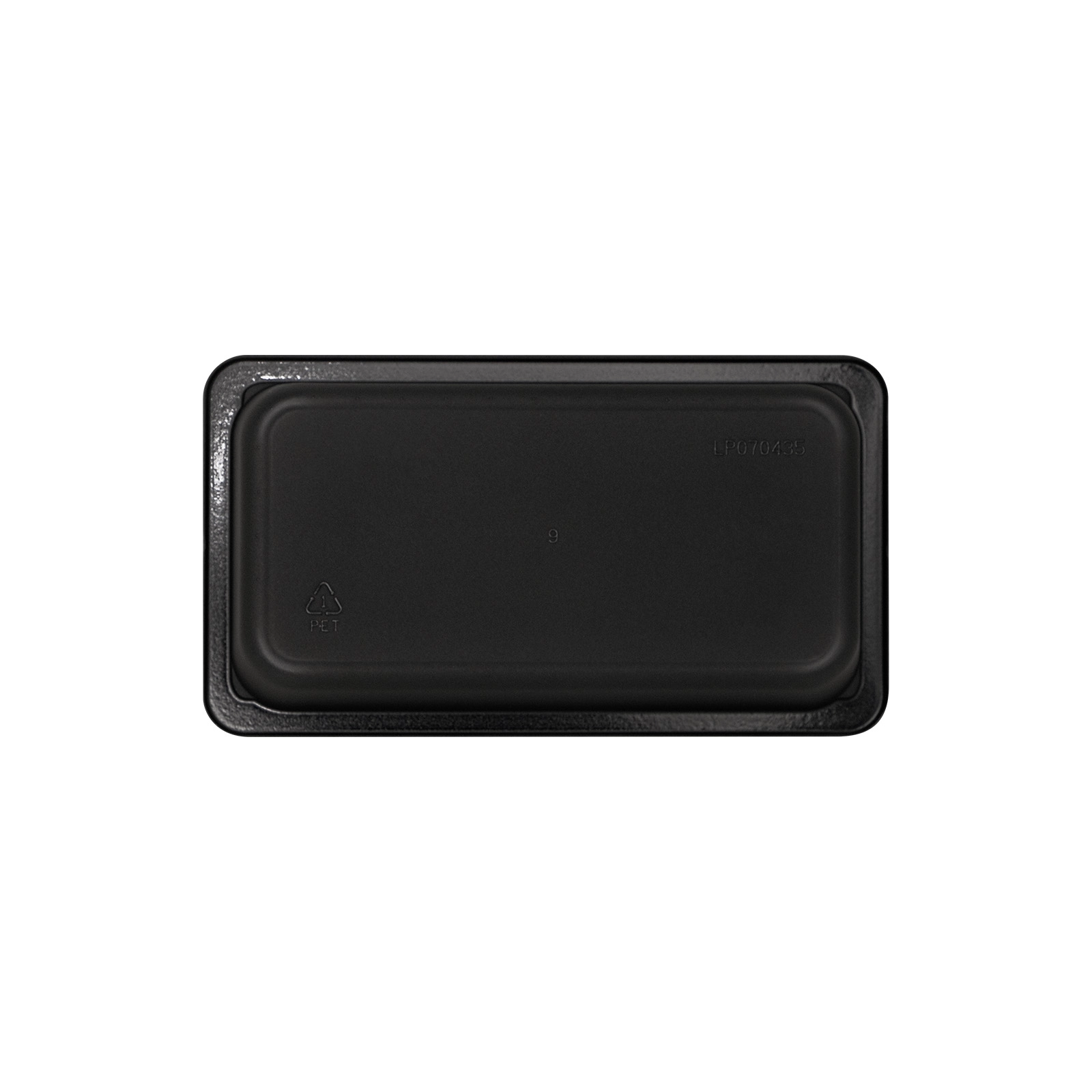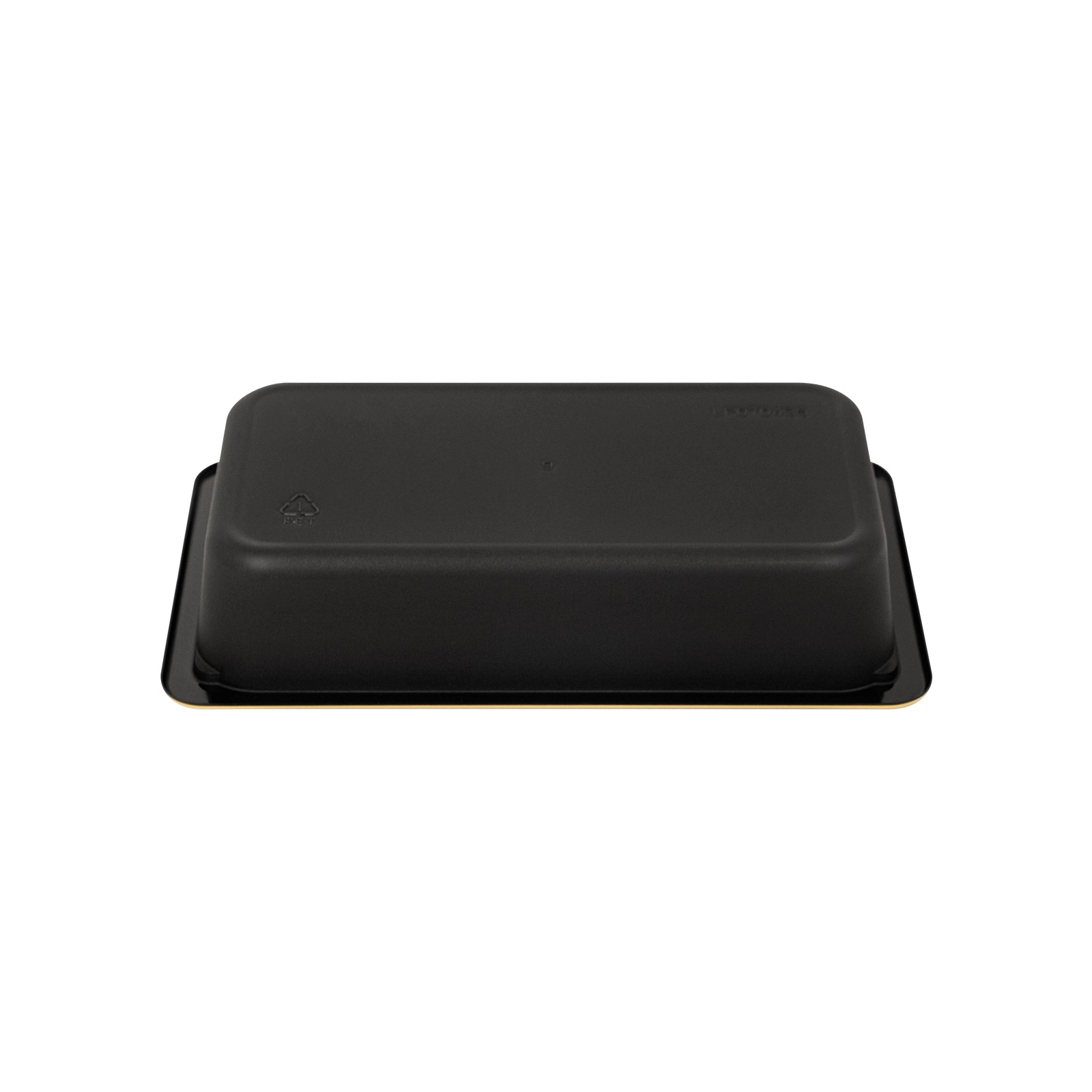
A thermoformed tray either forms cleanly on the first pull or it fails in a way that is expensive to diagnose: webbing between cavities, thin corners, a milky haze across the base, or a sheet that sags before the plug ever touches it. Almost all of these trace back to the same three variables — sheet temperature, draw ratio and thickness distribution — and PET and PP sit at different points on all three.
This article covers the forming window for both material families, what each failure mode is telling you, and how to specify sheet thickness so the finished tray still has the wall you designed. For the sheet grades themselves, see choosing between APET, rPET and ECOPET.
Why PET and PP form differently
Amorphous PET (APET) and polypropylene are both thermoformable, but their molecular structures respond differently to heat.
APET has a relatively narrow forming window. Below it the sheet is too stiff and cracks or tears at the corners; above it the sheet sags, thins unpredictably and can crystallise into a haze. It forms well at high draw ratios and gives excellent clarity when the window is respected, which is why it dominates clear food trays and display packaging.
PP has a broader, more forgiving window and better heat resistance in service, but it is softer and more prone to sagging across large unsupported areas. It is the right choice where the pack will see heat — hot-fill, microwaving, or a warm retail display — and where the tray needs chemical resistance that PET does not offer.
| Behaviour | APET | PP |
|---|---|---|
| Forming window | Narrow, temperature-critical | Broad, more forgiving |
| Sag resistance | Good within window | Lower, needs support |
| Finished clarity | Excellent | Translucent at best |
| Service heat resistance | Limited (CPET needed for ovens) | Good; chemical resistance also higher |
| Typical thickness used | 0.15 – 2 mm | 0.15 – 1.5 mm |
| Typical use | Clear trays, blister packs, display windows | Food containers, stationery, lighting, electronic packaging |
Reading a failed forming run
Each failure mode points at a specific variable, and correcting the wrong one wastes another trial.
- Webbing between cavities — the sheet is stretching sideways instead of following the mould. Usually too much heat combined with too little plug assist, or cavities spaced too tightly for the draw depth.
- Thin or holed corners — the sheet is cooling before it reaches the deepest point. Raise sheet temperature slightly or slow the draw; a plug or pre-stretch step also helps.
- Haze or a milky base — the sheet has been heated into the crystallisation range. This is a window problem, not a tooling problem: bring the temperature down.
- Excessive sag before forming — the sheet is over-heated or simply too thin for the span being heated. Increase thickness or reduce the unsupported area.
- Cracking along a fold or corner — the sheet is being formed too cold, or the material's toughness is inadequate for the radius. rPET and coloured grades behave differently here and are worth testing separately.
Draw ratio and where the wall thickness goes
A formed tray is never uniformly thick. Material flows from the base into the walls, and the deepest corners end up thinnest. The practical rule is to work backwards: decide the minimum acceptable wall thickness at the worst point, then choose a starting sheet thickness that will still leave that much material after forming.
This is why a tray that looks generous on the drawing can feel flimsy at the base. Two parameters drive it:
- Draw ratio — depth divided by the smallest width of the cavity. Higher ratios thin the sheet more and narrow the usable window.
- Corner radius — tight radii force material to stretch sharply, producing thin, weak corners. Opening the radius distributes the material far more evenly.
For oven-going applications the material changes again: CPET, crystalline PET, holds its shape from −40°C to 220°C and shows no deformation after 30 minutes in a 220°C oven, which is beyond what APET or PP will tolerate.
Matching sheet thickness to the finished tray
Thickness selection is a negotiation between three requirements, and they rarely point the same way:
- Rigidity — how much the tray must resist flexing when filled and stacked.
- Forming feasibility — whether the draw ratio can be achieved without webbing or holing.
- Cost — sheet is bought by weight, so every increment in thickness is paid for across the whole run, not per tray.
As a starting point, thin display windows and blister lids sit at the low end of the PET range, general food trays sit in the middle, and anything that must hold significant weight or resist oven heat moves toward the top of the range or into CPET. Material type, surface process and food-silicone options are specified alongside thickness, and all of them affect how the sheet behaves on the line.
What to send with a forming enquiry
Suppliers can usually name the right grade and thickness from six pieces of information: the finished cavity dimensions, the required minimum wall thickness, the draw depth, the food or product being packed, the service temperature, and whether the pack must be clear, translucent or opaque. Add any certification requirement — food contact, GRS, RoHS or REACH — and the quote will be accurate the first time.
We produce APET, rPET, ECOPET, PP and rPP sheet from 0.15 mm upward and can advise on the forming window for your specific cavity. Explore the sheet and material range or send us a drawing and we will come back with a datasheet and sample.
If the tray is to be printed as well as formed, printability has its own specification — see dyne value and corona treatment. For first-order quantities, sampling and lead times, the buying guide collection sets out what to settle before ordering, and bespoke cavity design is handled under customization and OEM/ODM, with document and sampling questions covered in our FAQ.