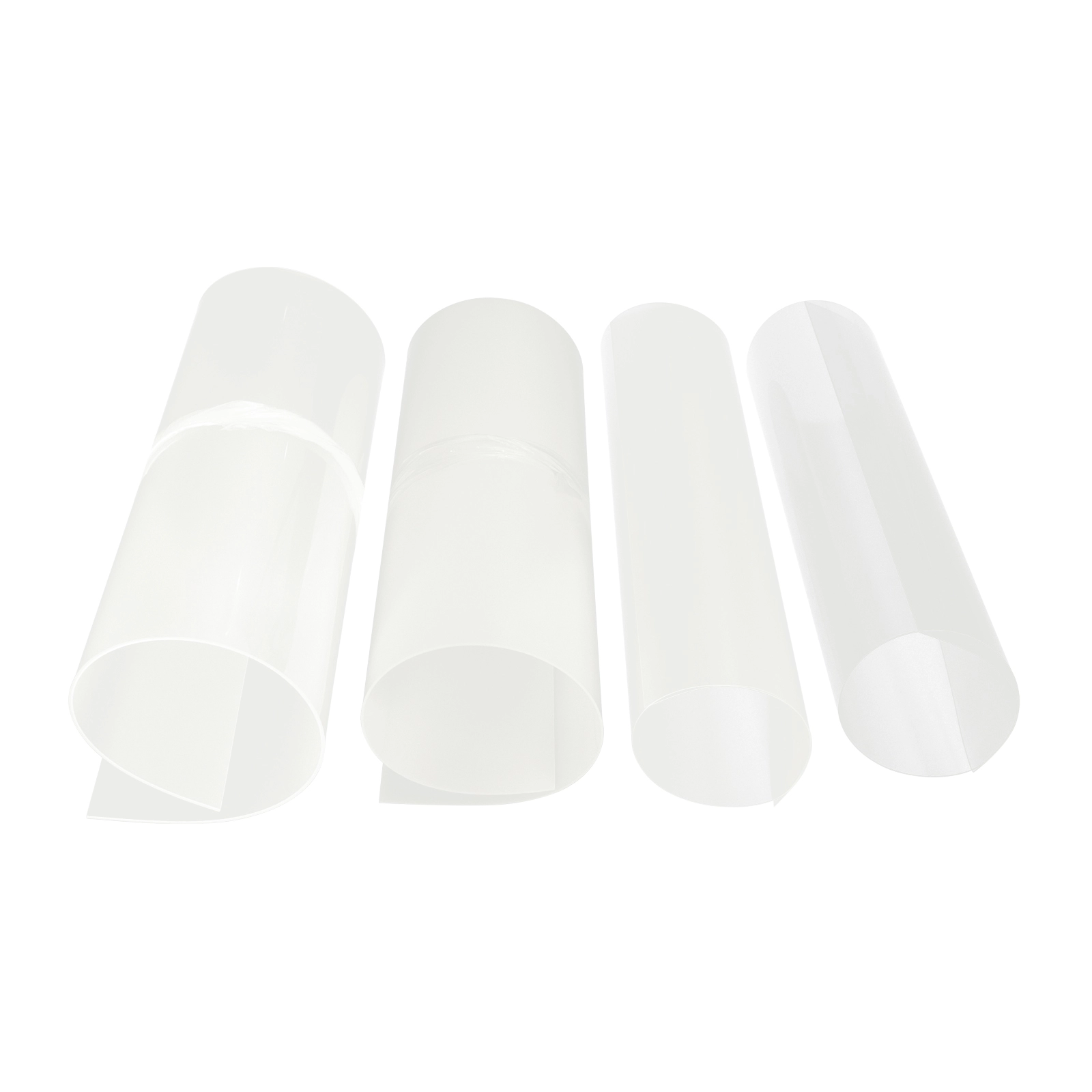
Most PET and PP sheet is bought to be printed, not just formed, and the difference between a print run that registers cleanly and one that beads up and flakes off is decided long before the press starts. Ink adhesion depends on surface energy, which is why dyne value and corona treatment appear on every material specification — and why a sheet that forms perfectly can still be unusable for printing.
This article covers what dyne value measures, when single-sided and double-sided corona treatment are the right answer, and how surface process and coating interact with printability. It follows the material selection covered in APET, rPET and ECOPET grade selection and the forming discussion in the PET and PP thermoforming window.
What dyne value actually measures
Dyne value is a measure of surface energy, expressed in dynes per centimetre. In practical terms it describes how well a liquid — in this case printing ink, adhesive or coating — will wet and spread across the plastic surface instead of pulling back into droplets.
Untreated PET and PP have low surface energy, which is why ink beads up on them. The working threshold for offset printing on PET and PP sheet is a dyne value of 39 or above, and it is the number to put in a specification rather than a general instruction to "make it printable".
The reason PP needs more attention than PET is that polypropylene has inherently lower surface energy and is more resistant to adhesion. PET starts closer to the threshold; PP generally needs treatment to get there reliably.
Corona treatment: single-sided or double-sided
Corona treatment raises surface energy by bombarding the sheet with a high-frequency electrical discharge, oxidising the surface so it accepts ink. The choice between single-sided and double-sided treatment depends entirely on what happens to each face of the sheet.
| Treatment | Effect | Typical use |
|---|---|---|
| None | Unprintable by offset without further preparation | Sheets used purely as display windows or unprinted packaging |
| Single-sided | One face at dyne 39+ | Printed lids, single-face printed boxes, sleeves |
| Double-sided (dual corona) | Both faces at dyne 39+ | Printed boxes printed on both faces, sheets printed then formed, laminated structures |
| Plus coating | Corona plus a functional coating layer | Applications needing scratch resistance or a specific surface finish |
Dual corona treatment is standard for PP sheet intended for offset printing, and it is available across the PP and rPP ranges. For PET, both single and double-sided treatment are offered depending on the application.
Surface process versus surface coating
These two terms are often used interchangeably on specification sheets, and they do different jobs.
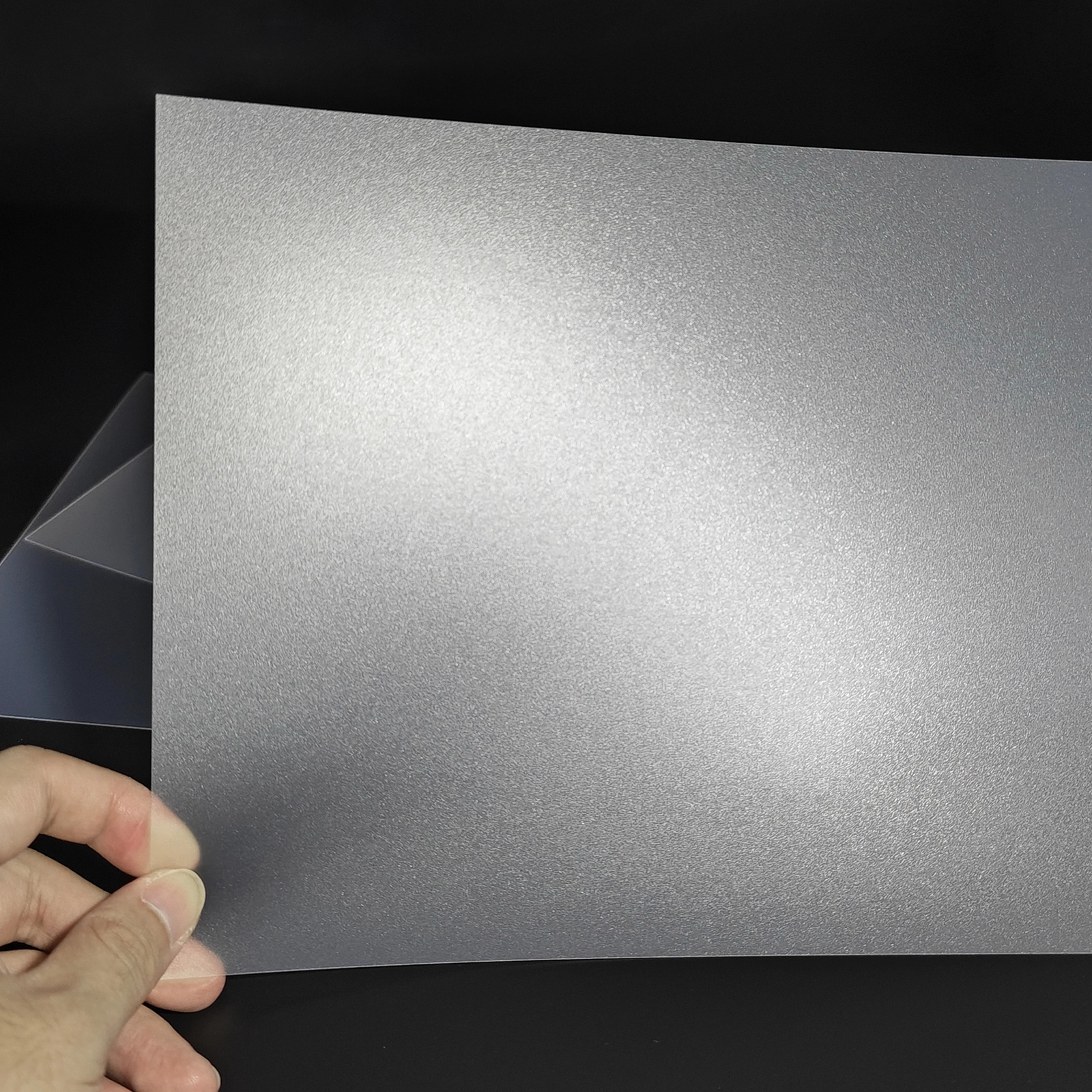
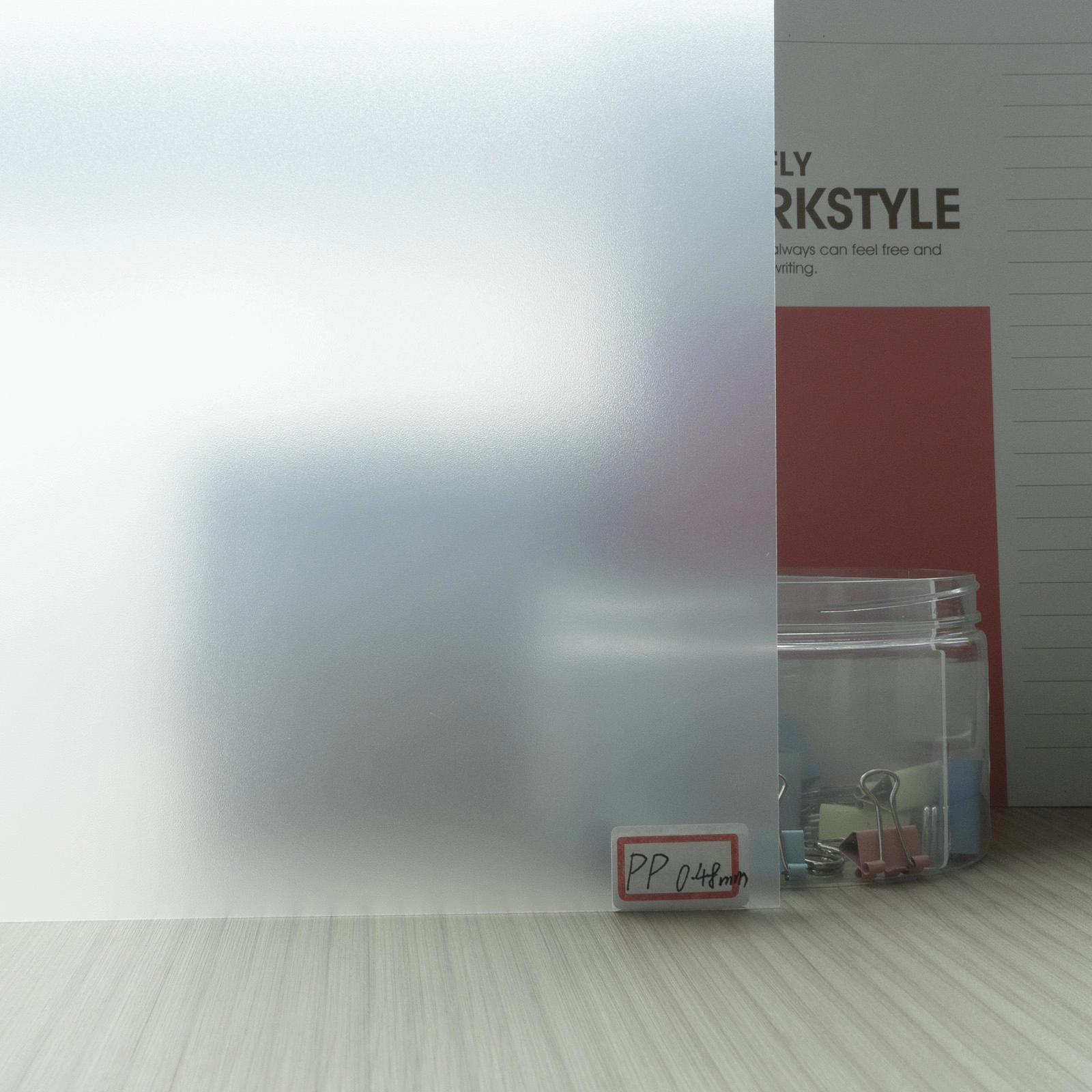
- Surface process changes the physical finish of the sheet: cast (glossy), mirror, matte, or a diagonal texture. It determines how the finished pack looks and reflects light, and it is a visual decision as much as a technical one.
- Surface coating adds a functional layer on top of the sheet: none, single-sided or double-sided. Coating is what carries properties the base polymer does not have — scratch resistance being the common case for rPET display applications.
A sheet can be specified as matte finish (surface process) with single-sided coating (surface coating), and the two choices are made independently. Getting this wrong is a frequent source of returned material, because a supplier who receives only a surface instruction may deliver the other one.
Printability across the material range
Dyne value and treatment requirements are not identical across grades, so printability should be specified per material rather than per order.
- APET and clear rPET — dyne 39+ achievable; both single and double-sided treatment available; coatings and scratch resistance options apply, particularly for display windows.
- ECOPET — same dyne 39+ threshold as ordinary PET, with mirror surface and optional single or double-sided coating.
- PP, frosted PP and rPP — dual corona treatment available across the range, suitable for offset printing; PP also accepts matte and diagonal texture finishes well.
- Coloured and opaque grades — printability is treated the same way, but the visual result of ink on a coloured substrate differs, and a draw-down or press proof is worth the time.
Ink adhesion, hygiene and the food-contact question
When the printed sheet becomes food packaging, printability and food safety are separate requirements that both have to be met. Adhesion must hold without the ink migrating or flaking into the product, and the finished article still needs to satisfy the relevant food-contact regulation.
The documentation that supports this travels with the material: FDA reports, EU REACH SVHC reports, RoHS, halogen and phthalate reports, California Proposition 65 statements and EN71-3 reports for toy-adjacent applications. Our testing regime includes a dyne value testing area, tensile strength testing, a programmable constant temperature and humidity chamber, and light transmittance and haze measurement — the same checks a buyer can ask to see evidence of.
One practical point for brand owners: if the pack carries a recycled-content claim, the corona and coating choices do not affect it, but the rPET grade and its GRS chain-of-custody paperwork must be in place before the print run, not after.
Specifying printability in one line
Two numbers and two choices cover the whole printability question: dyne value at 39 or above; treatment as none, single-sided or double-sided; surface process as cast, mirror, matte or diagonal; surface coating as none, single-sided or double-sided. Add the substrate grade, thickness and dimensions and a supplier has everything needed to quote and produce material that prints on the first pass.
We supply print-ready PET, rPET, ECOPET, PP and rPP sheet with dual corona treatment and coating options, backed by SGS, TÜV and FDA test reports. See the material range or send us your print specification and we will match it against a sample.
Print treatment is only one line of a material specification; the buying guide collection covers the rest of the comparison checklist. Custom surface processes, coatings and certification packages are described under customization and OEM/ODM, and document requests are answered in our FAQ.